From September 28 to 30, 2026, NordicHouse organized a study visit to Copenhagen and the island of Zealand for a group comprising mayors, commune heads, and representatives and staff from the Miechów County administration. The trip to Denmark was conducted as part of the project titled “Implementation of the Miechów County Energy Cluster Initiative.”
The project aims to develop the Miechów County Energy Cluster, which consists of six municipalities – Miechów, Charsznica, Książ Wielki, Słaboszów, Gołcza, and Racławice – along with the company Doeko Group Sp. z o.o. The tasks planned under the project stem from a comprehensive, long-term development strategy for the energy cluster. The diversity of the proposed activities allows the cluster to develop across multiple dimensions. Information and educational activities will facilitate the exchange of best practices and the promotion of the cluster concept throughout the region.
One of the tasks undertaken by the Municipality of Miechów within this project is a study visit to an energy community in an EU country to adopt best practices (such as energy clusters, energy cooperatives, biogas plants, and other solutions).
Denmark was selected as the destination for the study visit due to its status as a global leader in establishing energy communities. As the European Union’s most advanced laboratory for energy transition, Denmark offers proven operational models for clusters and cooperatives that serve as the foundation for achieving our project’s objectives. This initiative stems from the need to gain insights into best practices and experiences that foster the development of energy communities. The trip significantly enhanced the participants’ knowledge and expertise by drawing on the examples of energy communities already operating in other EU countries.
The study visit participants represent a Polish group actively engaged in the energy transition and the development of local energy communities. The goal was to acquire practical knowledge directly from leaders operating within an established energy cluster and an energy cooperative. We believe that this direct dialogue will pave the way for implementing proven solutions in the Polish market.
Itinerary for the visit to Denmark:
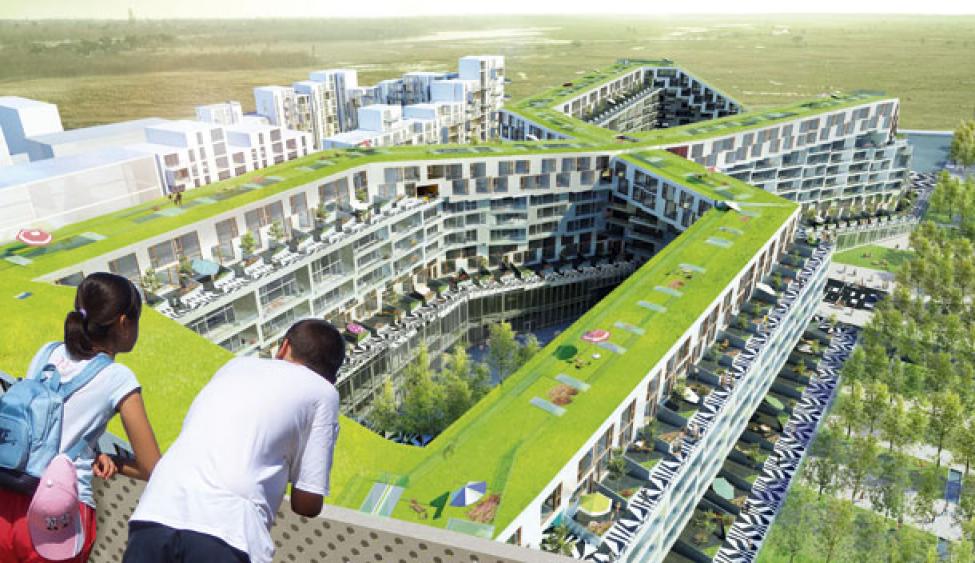
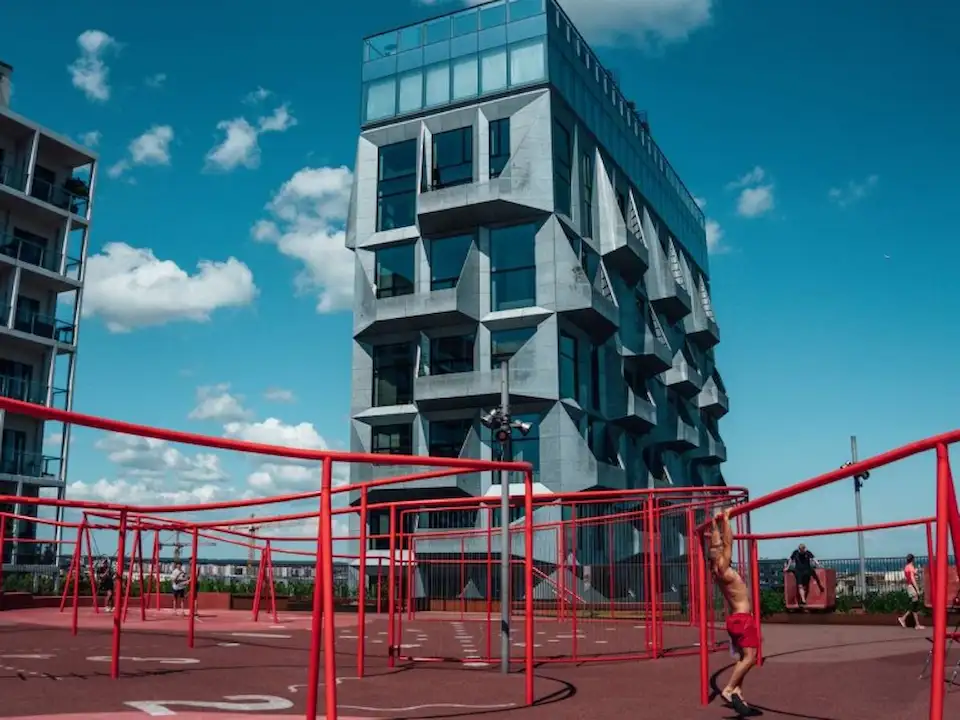
On the first day, given the time of their arrival in Copenhagen, the group visited attractions such as the Little Mermaid, Amalienborg Palace, and Ørestad. Ørestad is one of Copenhagen’s most distinctive and modern districts; located on the island of Amager, it sits right next to the airport and immediately adjacent to the Amager Fælled nature reserve. It was created as part of a major urban planning scheme designed to relieve pressure on the city center and establish a new, sustainable space for living, working, and education. The district is renowned for its bold architecture, expansive public spaces, and excellent transport links – the M1 metro line runs through it, making Ørestad one of the best-connected areas in all of Copenhagen. Rising within Ørestad – a rapidly developing district – is a building already regarded as an icon of contemporary architecture: the 8HOUSE residential complex, designed by the Bjarke Ingels Group (BIG). In 2011, it was among the projects nominated for the Mies van der Rohe Award. This project redefines the concept of urban living. The architects envisioned a space where diverse generations and lifestyles- from families to singles, and from the young to seniors – would come together under one roof. Thus 8HOUSE, emerged as a proposal for a new model of urban community.
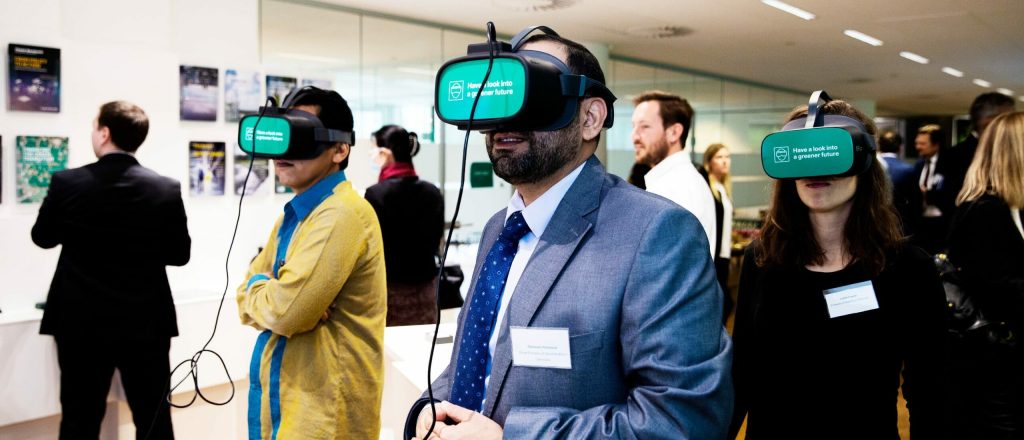
On the second day, the group visited State of Green, where Gry Klitmose Holm described the organization’s activities and answered numerous questions. State of Green is a Copenhagen-based Danish organization that serves as a central point of contact for international partners interested in Denmark’s green transition. It is a public-private partnership uniting the Danish government, businesses, and industry associations to create a knowledge platform regarding Danish technologies and collaborative models in the fields of energy, climate, water, transport, and the circular economy. State of Green promotes Danish expertise through reports, publications, conference participation, and the organization of study visits for delegations from around the world. Located in the heart of Copenhagen is House of Green—an interactive showroom showcasing solutions used in Denmark’s energy and urban transformation. It is a place where delegations can learn about specific technologies, implementation examples, and how Denmark integrates the public and private sectors in climate action. State of Green has become an international showcase for Danish green policy and a key point of contact for countries seeking inspiration and partnerships in the realm of sustainable development.
Next, Glenda Napier, CEO of Energy Cluster Denmark, spoke about the cluster’s activities and mission, and answered numerous questions from visitors. Energy Cluster Denmark is a Danish cluster organization that brings together the entire energy sector and serves as a neutral innovation platform for the green transition. Its mission is to connect companies, research institutions, startups, and public authorities in projects that develop new energy technologies, reduce CO₂ emissions, and boost the competitiveness of the Danish energy sector. The organization has over 500 members – ranging from large enterprises and infrastructure operators to universities, research institutes, and small technology firms. It operates across the entire energy value chain: from generation (wind, solar, biogas, geothermal) through storage and infrastructure (power grids, district heating, gas) to energy efficiency, sector coupling, CCUS technologies, digitalization, and energy security.
Following the visit to State of Green, the group headed to Nordhavn – Copenhagen’s state-of-the-art district – where Maciej Truszczyński, a Polish architect employed by By & Havn, spoke to the visitors about the area and outlined the vision behind this massive undertaking. By & Havn is a municipal company responsible for developing new districts in Copenhagen and managing the city’s entire port area. The company is 95% owned by the Municipality of Copenhagen and 5% by the Danish state, giving it a unique position that combines the roles of developer, landowner, and port authority. Its mission is to create new, cohesive, and sustainable urban districts—such as Ørestad, Nordhavn, and the future artificial island of Lynetteholm—while also ensuring the proper functioning and safety of Copenhagen’s harbor. In recent years, By & Havn has become particularly associated with major urban transformation projects: the development of Nordhavn into a modern waterfront district, the construction of a new container terminal in Ydre Nordhavn, and the realization of Lynetteholm—a massive peninsula designed to protect Copenhagen from rising sea levels while creating space for future residents. Nordhavn is a modern, rapidly developing district of Copenhagen built on the site of a former industrial port. Its transformation began in 2008, and today it stands as one of Europe’s largest urban development projects. Situated along the Øresund Strait, approximately 4 km from the city center, Nordhavn occupies an area of former docks and warehouses that are gradually giving way to new residential buildings, offices, public spaces, and canals. According to By & Havn’s plans, the district is ultimately intended to accommodate around 40,000 residents and provide an equal number of jobs; its development is grounded in principles of sustainable urbanism and a strong connection to the water. Nordhavn is designed as a “5-minute city,” where daily needs can be met within a short walk or bike ride. The district boasts excellent connectivity via the metro, S-train, buses, and yellow harbor ferries, helping to reduce car traffic. Nordhavn is being developed on a system of 11 artificial islands connected by canals, promenades, and recreational spaces, giving it the character of a modern waterfront city.
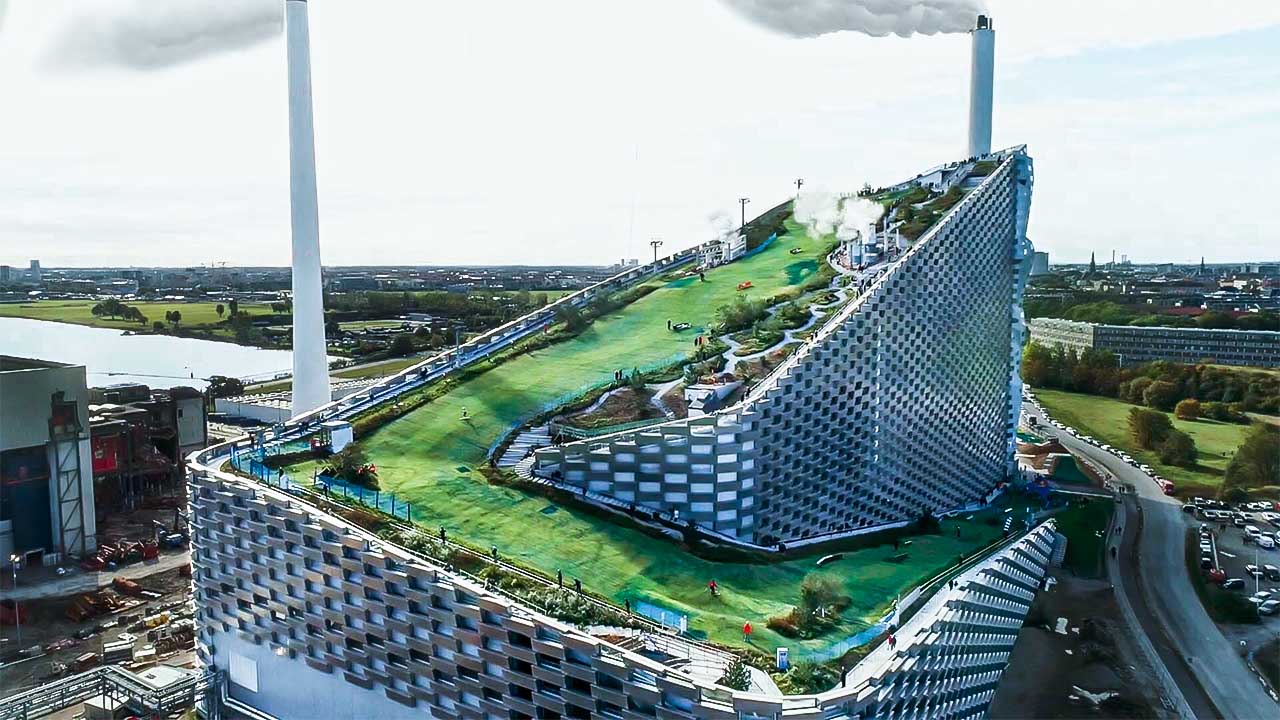
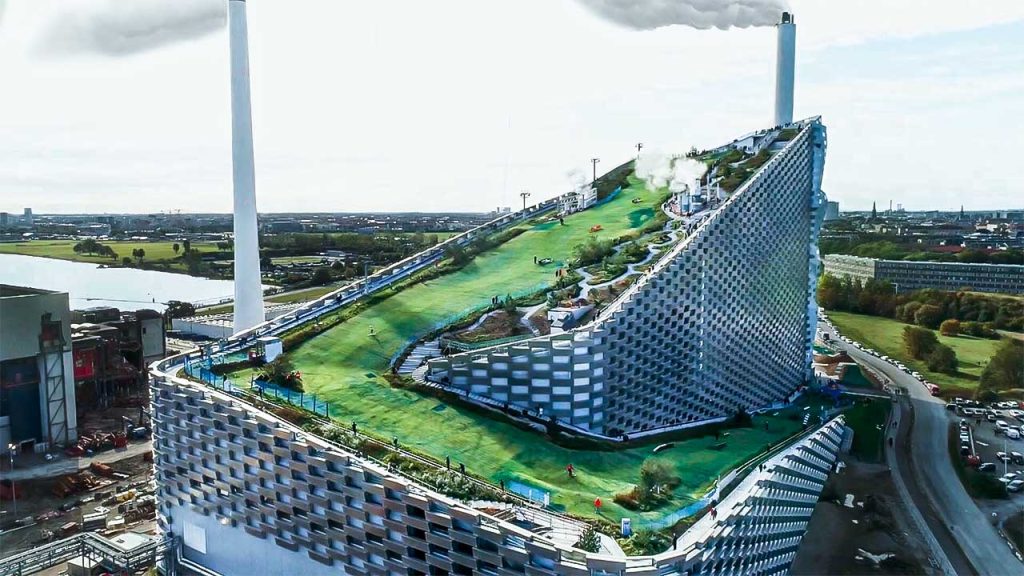
Next, the group visited CopenHill, one of Copenhagen’s most remarkable landmarks – a futuristic waste-to-energy plant featuring a rooftop ski slope, a climbing wall, and a green park. Designed by the architectural firm BIG, the building has become an icon of Denmark’s green transition, combining modern energy-recovery technology with recreation and architecture that attracts both locals and tourists. CopenHill processes waste from the entire metropolitan area, generating heat and electricity for thousands of households. At the same time, its roof has been transformed into a 450-meter-long, year-round ski slope with runs of varying difficulty levels. The façade features one of the world’s tallest climbing walls, while the surrounding area offers green spaces with viewpoints overlooking the Øresund Strait and the city center. It exemplifies Copenhagen’s approach to urban planning: technical infrastructure need not be hidden away- it can become an attractive feature of the urban landscape.
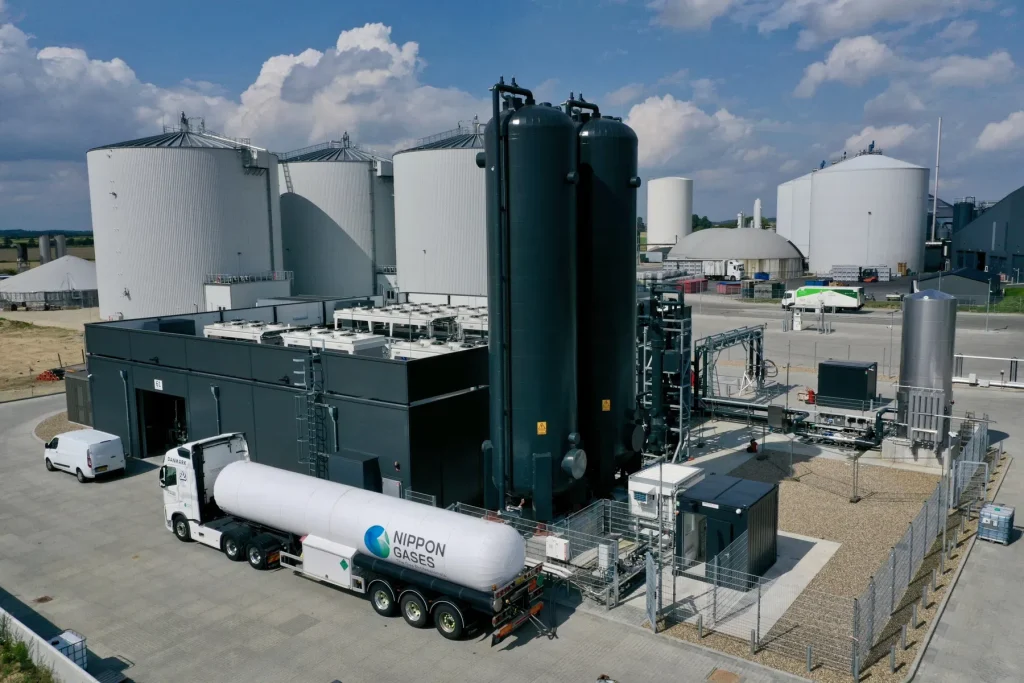
On the third day, the group traveled to Kalundborg – located 100 km west of Copenhagen – to visit the Kalundborg Bioenergi biogas plant. This modern facility is Denmark’s largest biogas producer and operates as part of the local industrial symbiosis ecosystem. The facility was developed as a joint venture between Ørsted and Bigadan and was designed to process organic waste from the food industry as well as by-product streams from other plants operating in Kalundborg. It thus aligns with a model in which one company’s waste becomes a resource for another. The biogas plant processes materials such as waste from pharmaceutical and food production to generate biogas and biomethane. The produced gas is purified and injected into the Danish gas grid, while the material remaining after fermentation is supplied to farmers as a valuable fertilizer product. The plant operates continuously, and its processes are optimized to minimize emissions and energy losses.