
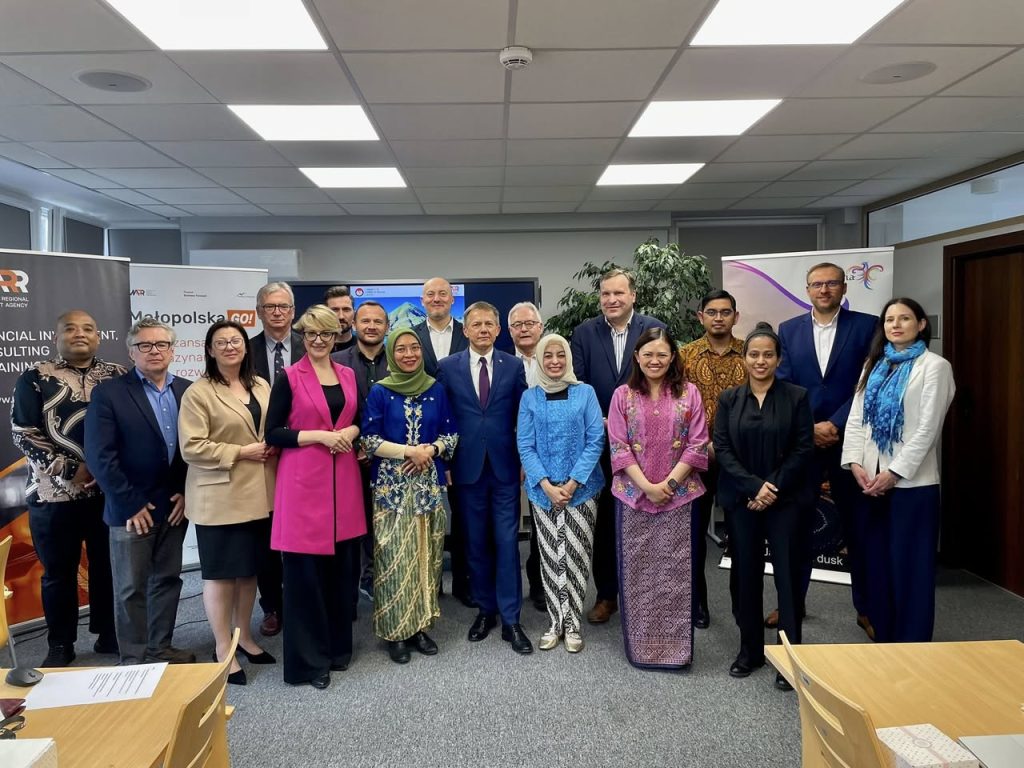
On April 21, 2026, NordicHouse participated in the Poland-Indonesia Business Forum organized by the Małopolska Regional Development Agency in cooperation with the Embassy of the Republic of Indonesia in Poland. A representative of the Indonesian Embassy in Berlin and a representative of the Trade Office in London attended the meeting.
Embassy representatives emphasized one thing: the door to cooperation is wide open. Now we need the courage to look beyond the European market and begin building lasting relationships in Asia. Małopolska companies have the potential to succeed in global markets. Now it’s time to turn this potential into concrete projects and contracts.
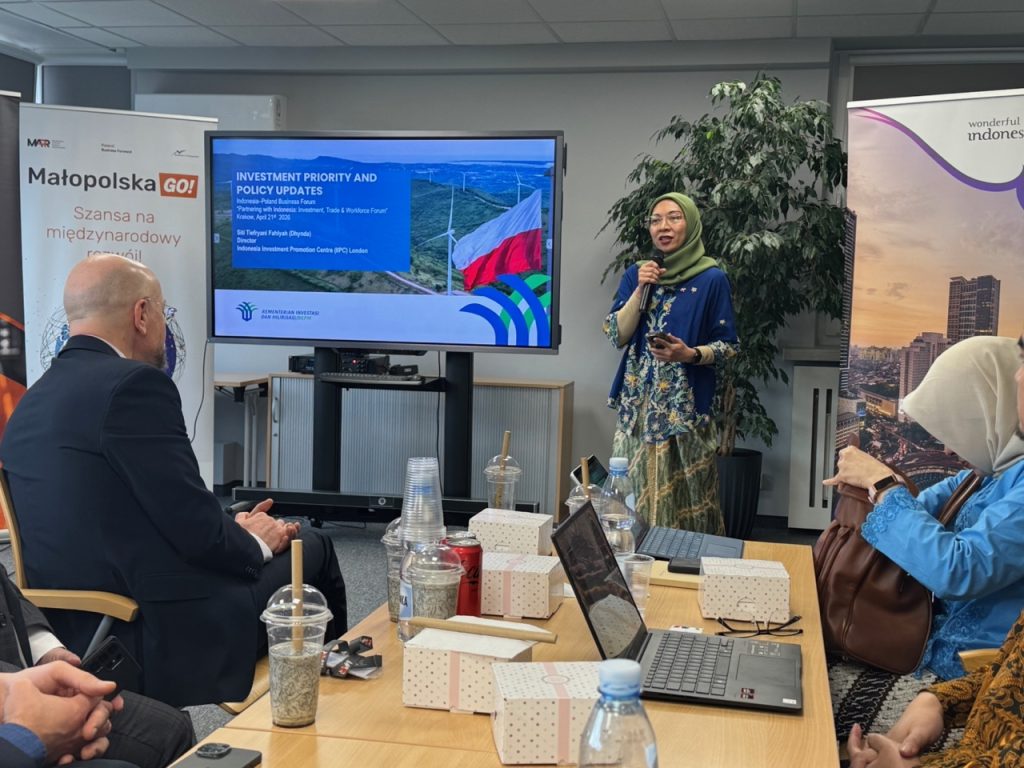
Indonesia is a key economic partner for Poland in Southeast Asia. Polish entrepreneurs are increasingly looking to the Far East, and the value of mutual trade is growing rapidly. How can economic cooperation be deepened?
Indonesia – the world’s largest Muslim country, one of the fastest-growing economies, and the fourth most populous country on Earth. Although Jakarta and Krakow are separated by 11,000 kilometers, Indonesia and Poland are experiencing increasingly close economic ties. This presents an opportunity for Polish companies planning to enter this interesting, exotic market.
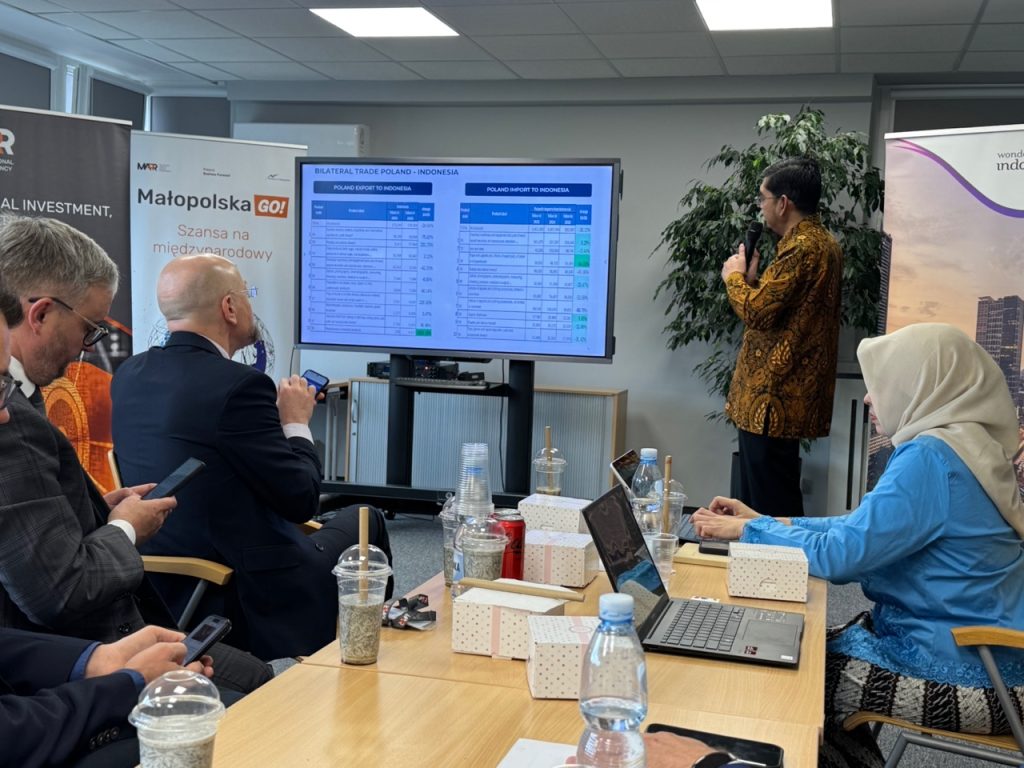
Polish-Indonesian business cooperation is a huge opportunity for both sides!
Poland offers modern technologies and experience in many industries, including agriculture, while Indonesia offers a dynamically growing market and openness to innovation. Joint projects mean not only economic development but also a cross-cultural bridge and new opportunities for entrepreneurs.
It seems that there is significant potential for the development of Polish exports, especially in the agri-food sector. The most important export and import items include: Exports from Poland to Indonesia: electrical machinery products, agri-food products, chemical industry products, and metallurgical products.
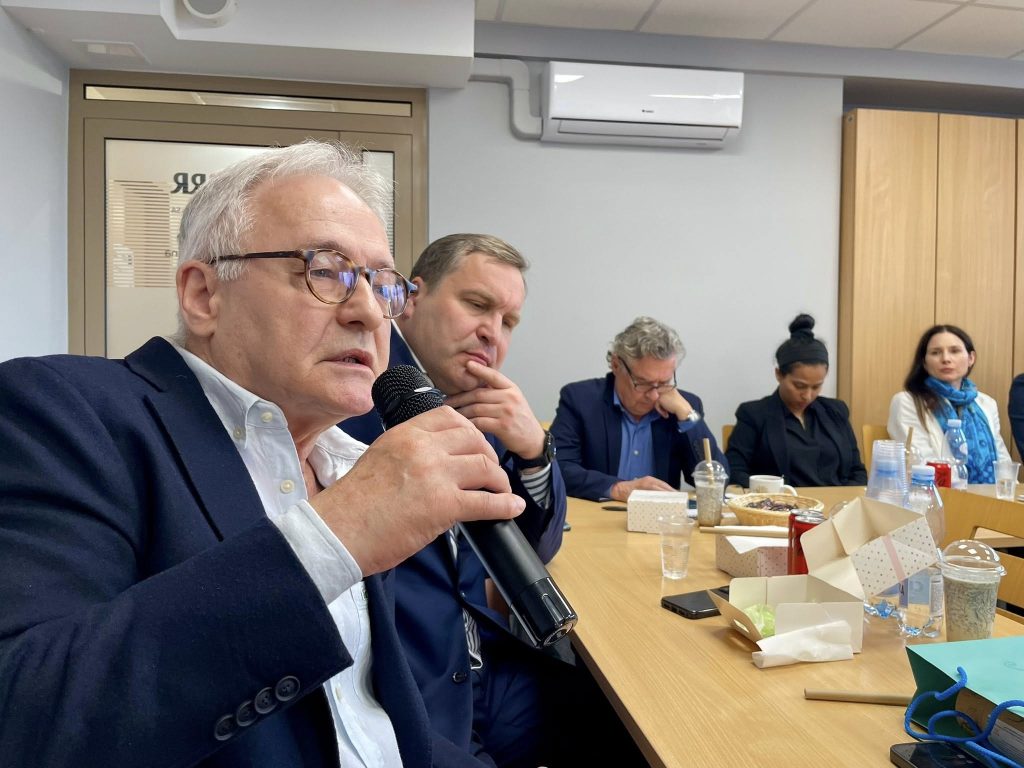
Economic Cooperation
Indonesia is a significant economic partner for Poland in Southeast Asia, with significant potential for cooperation, particularly in the defense, mining (oil and gas, coal), chemical, energy, agri-food, electronics, maritime transport, and environmental protection sectors.
Over the last five years of reporting, Indonesia’s exports increased by $97.7 billion, from $199 billion in 2019 to $297 billion in 2024. Recent exports include coal, briquettes, and similar solid fuels ($34.4 billion), palm oil ($21.2 billion), ferroalloys ($13.8 billion), natural gas ($8.56 billion), and copper ore ($8.39 billion).
EU-Indonesia Agreement. Poland could also benefit from the agreement.
The economic cooperation agreement between the European Union and Indonesia has received less public attention than the agreements with Mercosur or India. Meanwhile, it could become one of the most important instruments of European policy in the Indo-Pacific region in the coming years. It concerns a country with a population exceeding 275 million, the largest economy in Southeast Asia (ASEAN), a member of the G20, and a global leader in nickel mining – a resource of strategic importance for the energy transition and the development of the battery industry.
Negotiations on the Comprehensive Economic Partnership Agreement (CEPA) were formally concluded on September 23, 2025, along with the finalization of a separate Investment Protection Agreement. The economic relationship was designed to be comprehensive, encompassing trade in goods and services as well as capital protection mechanisms.
At the beginning of 2026, after finalizing the legal drafting and translations, the process of signing and ratifying the agreement began. On the EU side, it requires the approval of the EU Council and the European Parliament, with potential national ratification dependent on the agreement’s competence qualification. On the Indonesian side, parliamentary approval is required. A realistic scenario assumes CEPA’s entry into force in the first half of 2027, with the possibility of earlier provisional application of the trade section.
Agreement Terms
CEPA envisages broad trade liberalization, while simultaneously developing a regulatory framework to ensure its practical effectiveness.
a) Tariff Liberalization:
elimination of tariffs on approximately 98-98.5% of tariff lines in EU-Indonesia relations, implemented in a phased manner: 80% immediately upon entry into force and 96% after five years;
tariff reductions in industrial sectors, including automotive, machinery, and chemicals;
Improving market access for EU agri-food and industrial products.
However, mechanisms for reducing non-tariff barriers are crucial: increased regulatory transparency, simplified customs procedures, partial harmonization of certification requirements, and the development of regulatory dialogue. Their practical implementation will determine real benefits for European exporters and investors.
b) Critical Raw Materials and Downstreaming Policy
Indonesia has consistently pursued a downstreaming model, which in practice means restricting the export of unprocessed raw materials in favor of developing domestic value chains. As a result, access to raw materials becomes a function of investment presence and integration with local value chains, making industrial partnerships and technology transfer a prerequisite for the operational use of CEPA.
In this context, CEPA does not eliminate Indonesian export restrictions on raw materials, including nickel, but increases the predictability of access to critical metals and creates a framework for European investment presence.
c) Regulatory Instruments and Cooperation
CEPA also includes investment protection, regulatory dialogue mechanisms, and sustainability standards. Their goal is to create a stable framework for institutional cooperation, including in the areas of climate, environment, and labor law.
At the same time, the implementation of EU regulations—for example, those related to combating deforestation—may generate tensions, especially with regard to sensitive products such as palm oil. The effectiveness of these mechanisms will depend on implementation practices and the ability of both parties to manage disputes.
The Strategic Significance of the Agreement
The significance of CEPA goes beyond classic trade liberalization. It attempts to answer the question of whether Europe is capable of truly participating in the competition for strategic value chains—particularly in critical raw materials sectors. In this sense, the agreement represents a test of Europe’s “open strategic autonomy”: a test of its ability to translate regulatory and market potential into a sustainable economic presence in a region where Chinese capital plays a dominant role and US involvement remains selective.
Analysis of CEPA requires placing it in the broader context of the EU’s strategy towards Southeast Asia. As part of its relations with ASEAN countries, the EU has already concluded trade agreements with Singapore (2019) and Vietnam (2020), and in recent years has resumed negotiations with Thailand (2023) and the Philippines (2024). The agreement with Indonesia is consistent with the model of gradually building a network of bilateral economic relations, which in the medium and long term could become the basis for a more integrated cooperation architecture—encompassing not only trade but also investment and regulatory coordination. This model represents a conscious attempt to diversify economic ties and reduce dependence on individual markets, primarily China.
The Importance of Raw Materials
Indonesia, with some of the world’s largest nickel reserves and growing industrial potential, has the potential to become a significant link in alternative production structures—especially in sectors related to the energy transition and the battery industry. However, this potential remains conditional and depends on the ability of European companies to enter local industrial ecosystems and on the scale of investment support from the EU.
The significance of CEPA becomes fully apparent only in the context of competing models of economic presence in the Indo-Pacific region. In this context, it serves as a tool for reconfiguring supply chains. The Indonesian raw materials sector—particularly in the nickel sector—remains strongly linked to Chinese capital, which pursues a strategy of vertical value chain integration: from mining, through processing, to component production. This model relies on the scale and speed of investment implementation, and coordinated state support.
The United States is adopting a more selective approach, focusing on technologies and high-value-added segments, while utilizing extensive investment support instruments. Its presence in the region is patchy, but remains strategically important in selected sectors.
Against this backdrop, the European Union proposes a more systemic model, combining trade liberalization with normative projection and a stable regulatory framework. It includes investment protection, environmental and social standards, and mechanisms for institutional dialogue. This approach is potentially more predictable and sustainable, but also weaker in terms of capital mobilization and operational speed. Without the addition of sufficiently scaled investment instruments, the European presence will remain normatively competitive but operationally limited.
Environmental Standards
The sustainable development dimension also remains a crucial component of CEPA. In practice, it represents an attempt to externalize European regulatory standards, linking access to the EU market to meeting specific environmental and social requirements. This strengthens the EU’s global role as a regulatory actor, but also generates tensions with economic partners. Implementing anti-deforestation regulations is sometimes perceived by Indonesia as a form of regulatory protectionism, particularly with regard to palm oil.
The scale of these tensions will depend on implementation practices and the ability of both parties to pragmatically manage disputes. Ultimately, the fundamental challenge for the EU is not designing yet another regulatory framework, but translating it into tangible economic presence—through investments, industrial partnerships, and genuine engagement in local value chains.
Conclusions
In the coming decade, the agreement’s significance will not be measured solely by tariff reductions, but by the extent to which it translates into a sustainable presence of European industry in the region and the effective diversification of global supply chains. From a strategic perspective, CEPA’s importance for Europe will be determined by three factors:
the scale of European industrial investment in Indonesia;
the EU’s position higher up the value chain;
the ability to compete with the Chinese and American models.
Opening the Indonesian market generates limited competitive pressure in labor-intensive sectors such as textiles, but its scale will remain relatively small compared to the potential benefits of integration in global value chains. If CEPA becomes a catalyst for investment and industrial integration, it could truly strengthen the EU’s position in the Indo-Pacific. However, if its impact is limited to trade liberalization, it will remain an example of geo-economic ambitions that have not fully translated into the ability to operate in a globally competitive environment.
CEPA may also have some significance for Poland. As a producer of automotive components, machinery, and medium- and higher-value-added industrial goods, Poland could benefit from opening the Indonesian market—provided it pursues an active policy of export support and investment internationalization. In practice, this means moving beyond the model of passive trade expansion. Effective use of CEPA requires a presence in local value chains – through investments, partnerships, and participation in projects related to raw materials processing and component production. Without this, Polish companies will only partially benefit from the effects of liberalization.